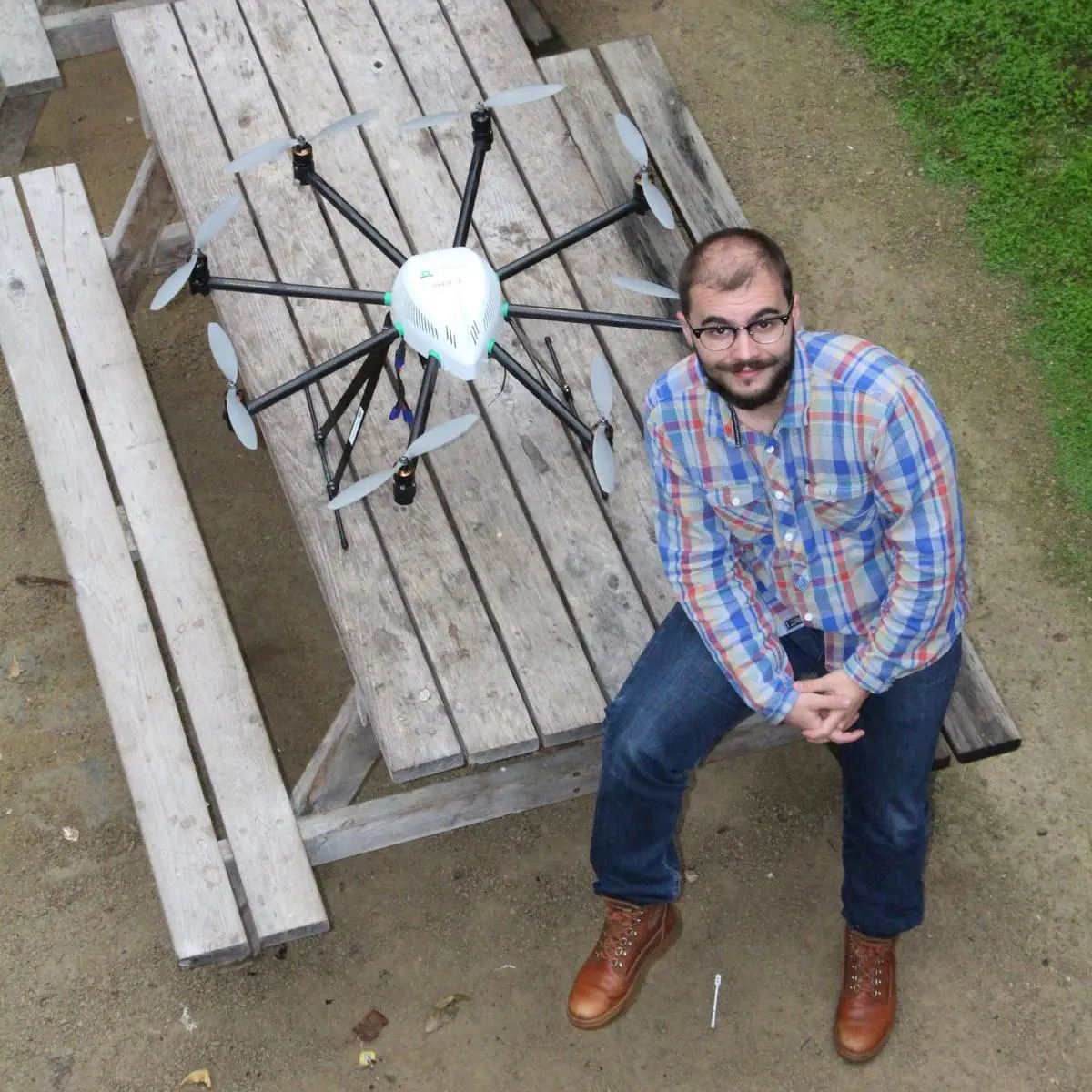
Drones, while fun to fly, are increasingly used by governments and industries for serious applications like agriculture and urban planning, driving a growing demand for knowledge about their capabilities and limitations.
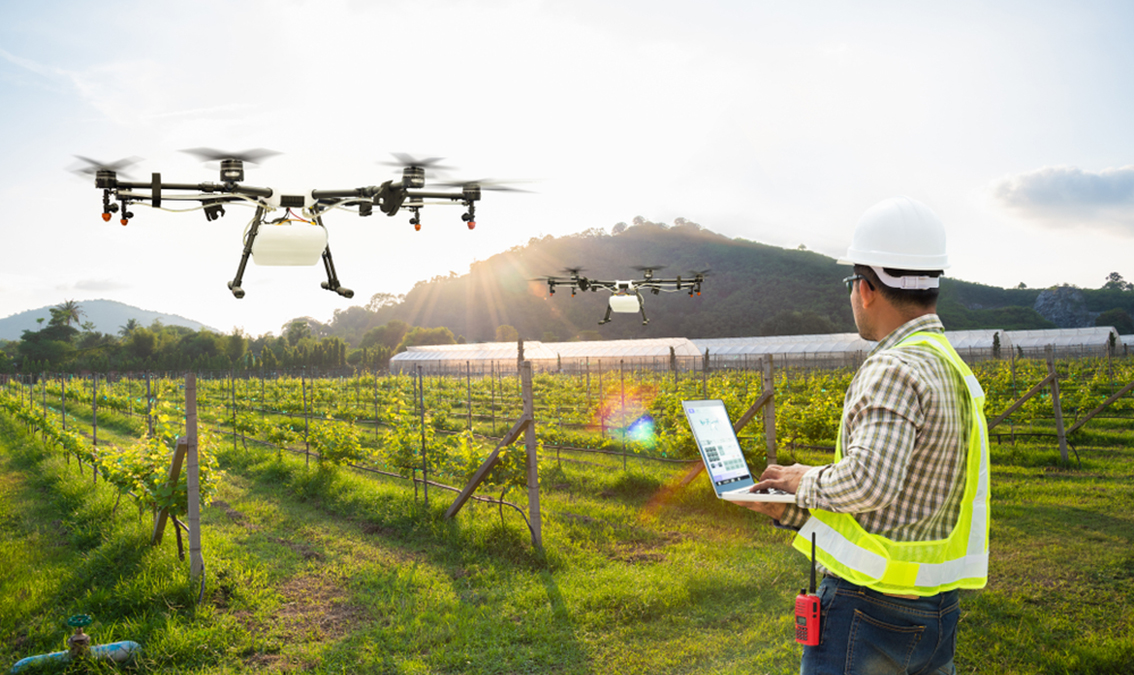
Course Details
| Language | English |
| Duration | 3 weeks |
| Effort | 4-5 hrs/wk |
Description
We are all getting familiar with the image of a drone in the sky. Although flying a drone is fun, drones are not toys. More and more UAVs or drones are used by governments and companies to gain answers and insights on nature, agricultural and metropolitan challenges among other fields. For example, small Drones/UAVs (Unmanned Aerial Systems) are employed in agriculture for crop observation, crop monitoring, field analysis and map generation through aerial surveys. And with the available software and 'mission planning tools' market growing, so is the demand for knowledge and understanding about its usage and limitations.
Our top professors of the 'Information Technology Group' and the 'Laboratory of Geo-Information Science and Remote Sensing group' of Wageningen University & Research will teach you whether it makes sense to use drones for your application, challenge or question. You will learn how to plan an end-to-end mission (from image acquisition to data visualization) for your specific drone application and how to execute a drone mission safely. Afther finishing the MOOC Drones for Agriculture: Prepare and Design Your Drone (UAV) Mission, you will have gained full understanding of the aerial mapping workflow and how to implement it in a programmable small drone. You will know which steps you need to take to gain the valuable insights you are looking for.
Do I need a drone to complete this course?
No! You do not need a drone to complete this course. For all the assignments and exercises we will provide the necessary material (in case it is needed). But, we expect to pick your curiosity with this course and hopefully nudge you into buying one and joining the community ;).
For whom
Although the course is initially made for agriculture technicians, researchers or graduate students from multidisciplinary technical fields, everyone that aims to learn how to use an off-the-shelf small drone for generating a high-resolution image from a field, or has a general high interest in drones, is very welcome.
What you will learn
After this course you will be able to :
- Identify whether it makes sense to use a drone for your application or challenge.
- Give examples about the available airborne technology.
- Give an overview what international legislation and regulations are concerning drones.
- Perform the required flight preparations and create- and execute a safe mission setup.
- Define a mission planning with the available open source and commercial tools.
- Discuss the potential of image product delivery for different purposes.
- Examine drone data and derive information from it.
Grow these skills
Prerequisites
To successfully finish this course you do not need any prerequisite knowledge. Nonetheless, being a computer software enthusiast will help a lot!
Plan
Module 1: Remote Sensing, UAV's and Applications
In this module you will learn about what Remote Sensing is and how we can use UAVs as tool for our applications. We will explore the possibilities that airborne technology offers.
Module 2: Planning a mission and acquiring the data
During module 2 we will cover the steps that need to be followed when planning a mission, how to do it, what is needed and what to look out for and how the data is acquired.
Module 3: From acquisition to visualisation
Module 3 focuses on evaluating and processing the data that we have obtained during the mission and how we can process it to deliver a product instead of just a photo gallery! This module will also show some simple examples of data processing techniques used in academia and professional work.