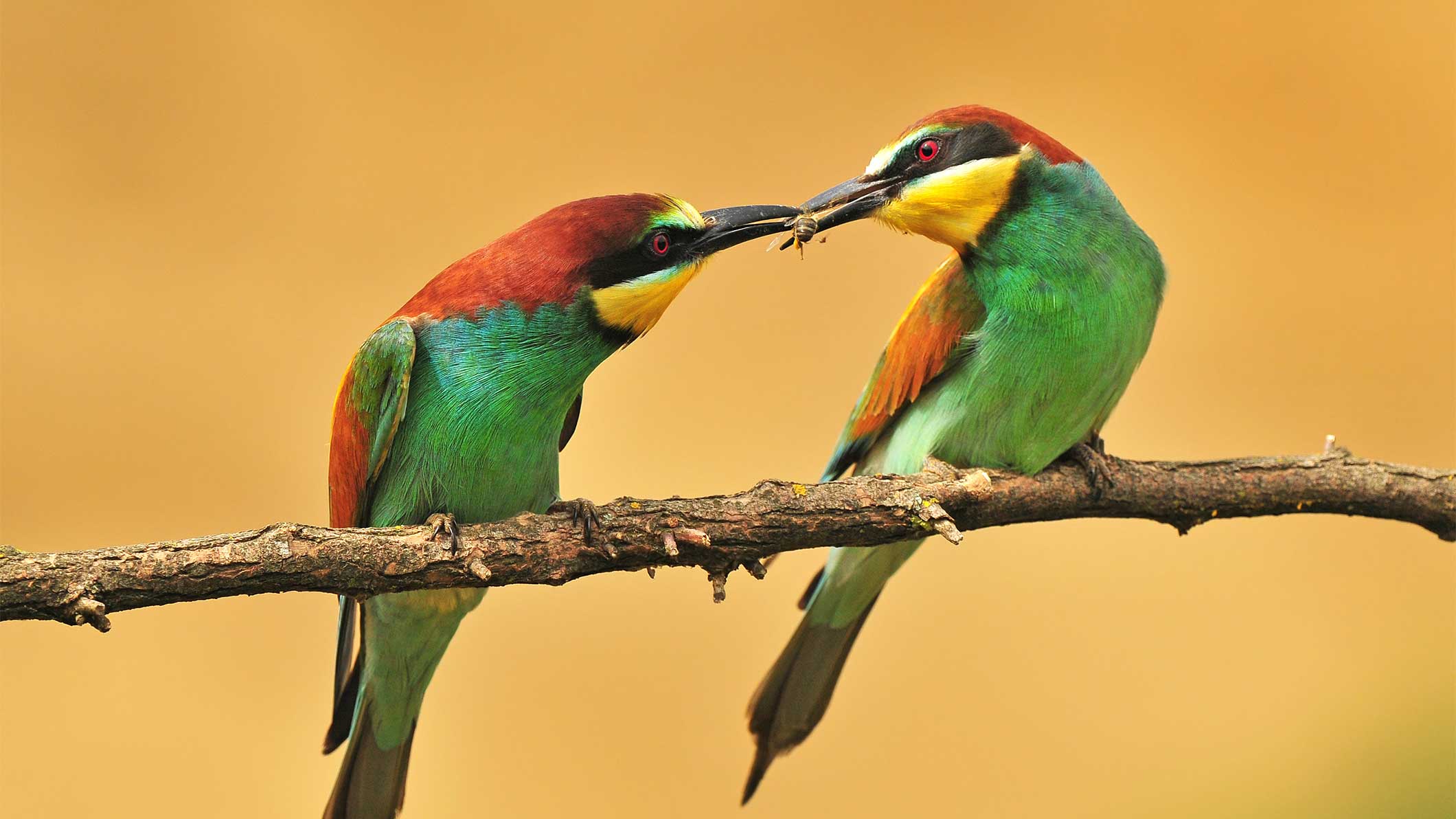
Explore the amazing range and complexity of wild animal behaviour. Discover how animals learn, communicate, find food, avoid predators, and interact socially.
Course Details
| Language | English |
| Duration | 6 weeks |
| Effort | 4-6 hrs/wk |
Description
Do you want to understand how and why animals behave the way they do, and how we test hypotheses about behaviour scientifically? This biology and life sciences course provides an introduction to the complexities of wild animal behaviour, and how it is studied.
Over six weeks, learners will explore the various behaviours animals adopt in order to meet the challenges of their daily lives. We begin with how animals learn and communicate with each other, then move on to discuss how they find food, avoid predators, choose their mates, and rear their offspring.
For whom
This course is aimed at anyone looking to broaden their understanding of animal behaviour beyond nature documentaries or a typical high school education.
What You Will Learn
After successful completion of this course, you will be able to:
- Understand the key concepts used to study and interpret animal behaviour.
- Recognize the fascinating range and complexity of behaviour across animal species.
- Understand how scientific hypotheses are developed and tested in behavioural research.
- Explain how animals learn and communicate.
- Describe animals' reproductive behaviour and its significance.
- Understand how animals function within social groups and societies.
Grow these skills
Prerequisites
No previous knowledge is required, only curiosity and enthusiasm for the subject.
Plan
Week 1: The Science of Animal Behaviour
Explore the foundations of animal behaviour, including evolution, natural selection, anthropomorphism, and the scientific method used to study behaviour.
Week 2: Learning, Cognition and Development
Discover how animals learn from experience, adapt their behaviour to changing environments, and use cognitive abilities to solve problems.
Week 3: Communication
Learn how animals communicate through visual, auditory, chemical, and other signals, and how communication is shaped by social and environmental factors.
Week 4: Finding Food and Avoiding Predators
Examine the strategies animals use to locate and exploit food resources while minimizing the risk of predation.
Week 5: Mating Systems and Parental Care
Investigate reproductive behaviour, including mate choice, competition, mating systems, and the diverse ways animals care for their offspring.
Week 6: Living in Groups
Explore the costs and benefits of social living, the evolution of complex social systems, and the cooperative behaviours that emerge within animal groups.